


Ely Buendia trades rock anthems for Bicol lines in Cinemalaya film ‘Padamlagan’
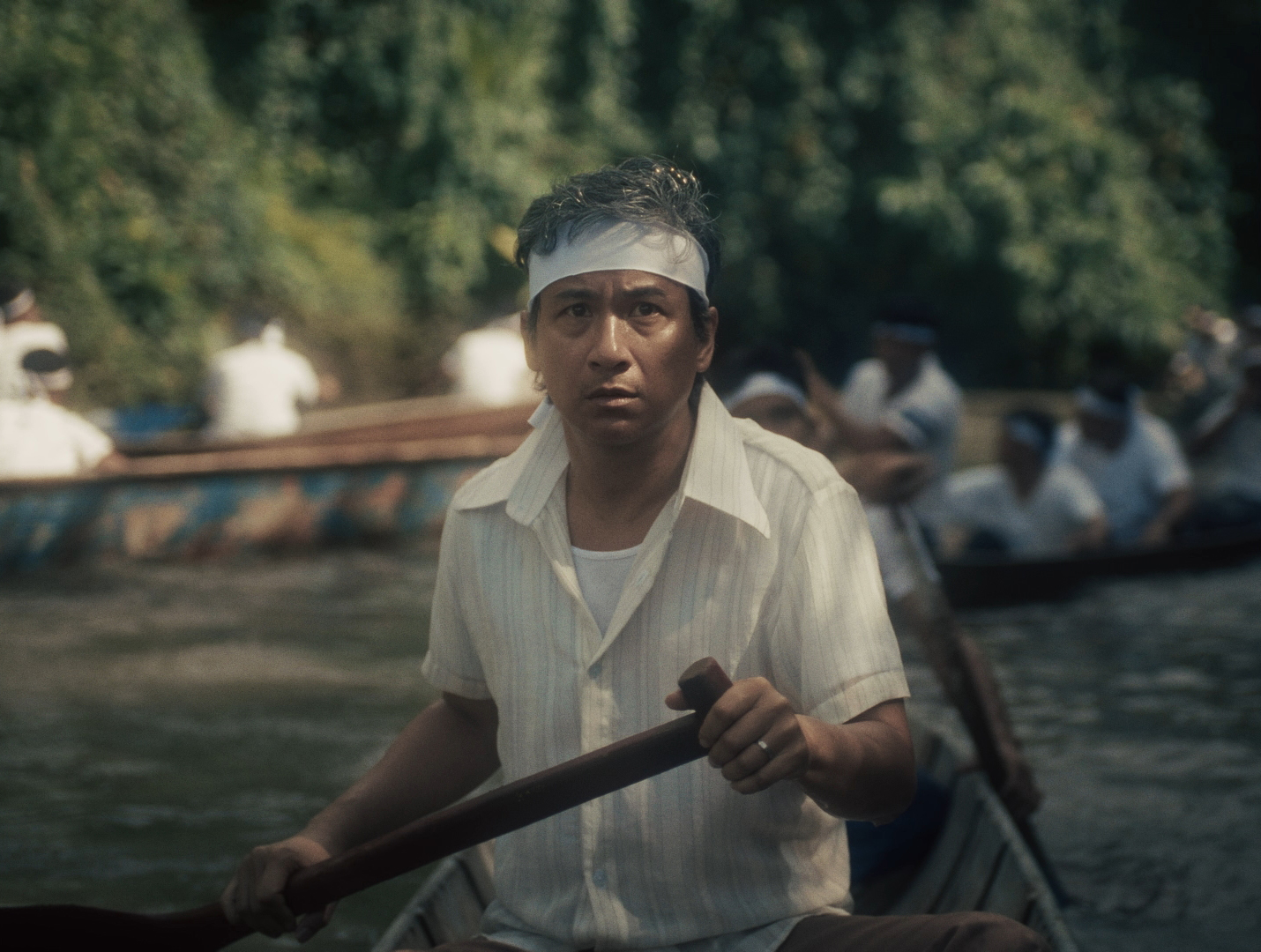
A scene from “Padamlagan.” Image: Courtesy of the Cultural Center of the Philippines
By: Marinel Cruz
Eraserheads frontman Ely Buendia trades his guitar for the big screen in “Padamlagan,” a Cinemalaya period film rooted in his native Bicol — and told entirely in the Bicolano language.
For Buendia, the film isn’t just another creative challenge. It’s personal. “It’s going back to my roots,” he told Inquirer Entertainment. “I was there when it happened. I was two years old when it happened. I knew all these people—they were my parents, uncles, aunties. I knew exactly the world in which they lived. It’s my offering to them, to relive their experiences through this movie.”
“Padamlagan” revisits the Colgante Bridge tragedy in 1972, when over a hundred lives were lost just days before Martial Law was declared. Buendia plays Doring, a father searching for his missing son (Esteban Mara) amid the chaos. It’s “a heavy role,” he admitted, one with “hardly any ray of sunlight” in the character’s journey.
The story feels uncomfortably resonant today. “It could just be a coincidence,” Buendia said, “but then I don’t believe in coincidences. This problem has been deep-seated in our culture for decades. The fact that Jenn (Romano, director) was drawn to it means it really has to be told.”
As a father, he drew from his own relationship with his child. “It’s something I don’t want to happen in real life, of course. Being a father to a son — and the dynamics between the two characters — I definitely put some of those emotions into the scenes with Esteban.”
Asked whether he prefers acting or music, Buendia saw no rivalry. “It’s two different industries, but collaboration is at the heart of both. In a band, you compromise, you work with others. Filmmaking is the same. That’s what I love about it.”
Language itself became both a challenge and a triumph. Romano noted how contemporary Bicolano had to be adapted for authenticity. Buendia, despite speaking the language, struggled with archaic words. “Some didn’t register because they were so old. We had one scene that took a long time because I couldn’t memorize the lines. Even though I speak the language, the deep words were still hard. It was like ‘Shogun,’ even the Japanese actors had a hard time because the language was archaic.”
For co-star Sue Prado, the difficulty was worth it. “So many things happen in this country that are metro-centric. But Martial Law happened nationwide. Some important stories are left behind. To be part of those who tell the truth — that’s my goal. It’s my duty as a human being.”
Mara added that regional stories deserve more attention. “Since it’s a Bicol film, hopefully, when people from other places see it, they’ll be inspired to tell their own regional stories. That’s also part of the advocacy of our producer (Kristine de Leon) with her work with regional filmmakers.”
De Leon admitted how difficult it was to fund the project. “This is very hard to finance because it’s regional and uses regional language. Cinemalaya is shown at the center, but our film is really for the Bicolano audience. People generally don’t like reading subtitles. I believe there are so many beautiful stories from regional filmmakers. Also, Jenn is a female filmmaker. She has a different perspective of history. Usually men are the ones telling history. One of our goals is the elevation of regional cinema.”
Buendia said the project was an easy yes. “The story really got me. They gave me a pitch deck, and it was like a thesis. I got to know the director through her objectives and passions, and I shared them. Obviously, it’s a Bicolano project so I just had to do it.”
Romano traced her inspiration back to archival research at the University of the Philippines. “I encountered a 1972 report on the tragedy in Naga. The last headline in September 1972 was the Colgante Bridge tragedy and then the declaration of Martial Law. After that, there was a media blackout. For someone who did not experience that period, it sparked my curiosity.”

“Padamlagan” director Jenn Romano (center) with lead actors Ely Buendia, Sue Prado, Estaben Mara, and line producer Kristine de Leon. Image: Marinel Cruz/INQUIRER.net
Casting leaned toward actors with Bicolano roots: Buendia from Naga, Prado from Libmanan, and Mara from Sorsogon. De Leon recalled pitching to Buendia: “We were so nervous. But if you watch him here, you won’t see the Ely Buendia you know. As an actor, his portrayal of Doring is heartbreaking.”
With its mix of historical tragedy, heavy emotions, and deep Bicolano roots, “Padamlagan” feels both timely and timeless. For Buendia, transitioning from music to acting isn’t just a side project, but a homecoming.